Alexandre Dumas
Introduction
Alexandre Dumas (father), born on July 24, 1802, in Villers-Cotterêts, France, was a prolific novelist and playwright who left a significant mark on French literature. Known for his vibrant style and ability to weave intricate historical plots, Dumas remains one of the most influential figures in adventure fiction, having captivated readers worldwide with his daring narratives.
Early Years and Education
The son of Thomas-Alexandre Dumas, a Haitian-born general in the French army, and Marie-Louise Élisabeth Labouret, Dumas grew up in an environment shaped by military nobility and the social tensions of the French Revolution. After the death of his father in 1806, the family faced economic hardships, forcing Dumas to leave formal schooling at an early age. However, his passion for literature led him to move to Paris in 1822, where, working as a clerk for the Duke of Orléans, he was able to complete his self-education.
Literary Career and Theatrical Success
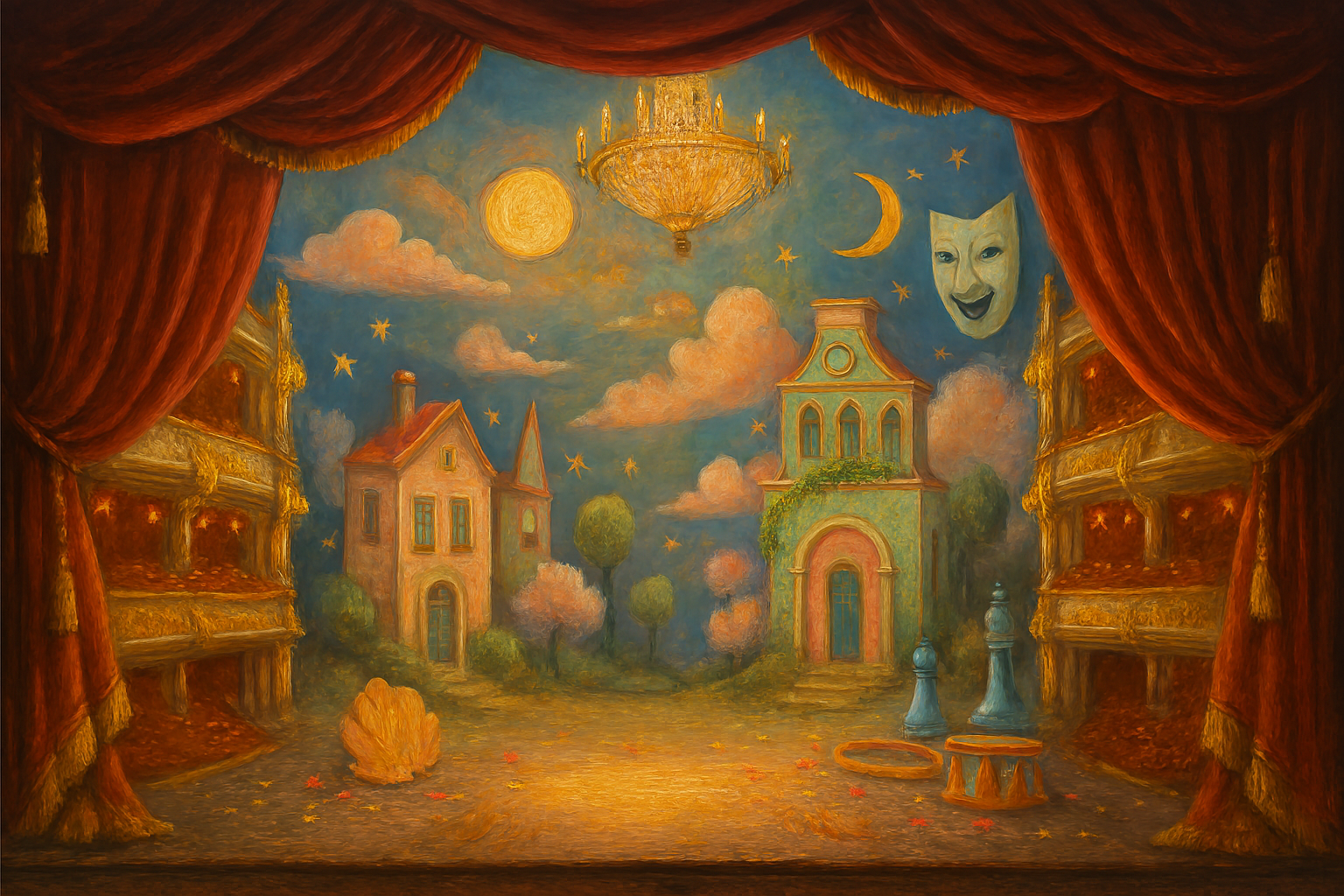
Dumas began his literary career in 1825 by writing poems and long prose pieces while also composing light plays for popular theaters. His true breakthrough as a playwright came in 1829 with Henri III et sa cour (Henry III and His Court), a work that foreshadowed the arrival of Romanticism in French theater. In 1831, Antony further solidified his reputation, marking the start of an intense period of creating historical dramas, tragedies, and melodramas, often focused on French national history.
Generated by AI
The Golden Era of Historical NovelsIn 1832, inspired by the works of Sir Walter Scott, Dumas ventured into historical fiction. Although his early works didn’t achieve widespread success, the publication of The Three Musketeers in 1844 launched him into the literary spotlight. This success was followed by The Count of Monte Cristo, solidifying his position as one of the most popular writers of his time. Dumas is believed to have written over 300 works, including novels, articles, and plays, many of which were serialized in newspapers, allowing him to maintain a prolific output and a varied repertoire.
Generated by AI
Adventures Beyond WritingDumas's life was as adventurous as the stories he created. In 1847, he founded the Théâtre Historique in Paris, though the venture went bankrupt four years later due to mounting debts. In 1851, after political disagreements and financial troubles, he went into self-imposed exile in Belgium, where he wrote his memoirs and produced new adventure novels. Returning to France in 1853, he started a satirical magazine called Le Mousquetaire (The Musketeer), which later became Le Monte-Cristo.
Facing censorship under Napoleon III, Dumas left France again and joined the expedition of Italian revolutionary Giuseppe Garibaldi in 1860, where he helped purchase arms for Garibaldi’s forces and was appointed curator of the Naples Museum.
Later Years and Legacy
Despite his literary success, Dumas struggled financially in his later years. He lived at the expense of his son, Alexandre Dumas (the younger), and his daughter, Madame Petel. Nonetheless, his literary legacy endures as his works continue to be read, adapted, and enjoyed worldwide. His writing style, characterized by fast-paced dialogue and thrilling plots, has influenced generations of writers and filmmakers.
Conclusion
Alexandre Dumas was a man of action both in his life and his writing. His ability to create vibrant worlds and unforgettable characters has secured his place in the history of literature. Through works like The Three Musketeers and The Count of Monte Cristo, Dumas invites us to explore themes of honor, revenge, and friendship while transporting us to times of intrigue and adventure.
Edgar Allan Poe
Introduction
Edgar Allan Poe, born on January 19, 1809, in Boston, Massachusetts, remains one of the most influential figures in American literature. Known for his works of horror, mystery, and macabre, Poe’s writing delves deeply into the human psyche, exploring themes of death, loss, guilt, and the supernatural. Despite his relatively short and tumultuous life, Poe's legacy continues to shape literary and popular culture to this day.
Early Life and Family Tragedy
Poe’s life was marked by tragedy from an early age. His father, David Poe Jr., abandoned the family, and his mother, Elizabeth Arnold Poe, died of tuberculosis when Edgar was just 2 years old. The orphaned child was taken in by John and Frances Allan, a wealthy couple from Richmond, Virginia. However, Poe never fully felt accepted by his foster father, and this strained relationship would have a lasting impact on his life. Poe attended the University of Virginia in 1826 but was forced to leave due to financial difficulties. Subsequently, he enlisted in the United States Army under the name Edgar A. Perry. After two years, he gained an appointment to the U.S. Military Academy at West Point, but his relationship with his foster father deteriorated further, and he was dismissed from the academy in 1831.
Literary Beginnings and Struggles
After leaving West Point, Poe moved to Baltimore, where he began writing short stories and poetry. His first book, Tamerlane and Other Poems, was published in 1827 but went largely unnoticed. Poe's early career was marked by financial hardship, and he often struggled to make a living from his writing. In 1836, Poe married his 13-year-old cousin, Virginia Clemm, who, despite her youth, was his greatest source of emotional support. Unfortunately, Virginia’s health was frail, and her prolonged illness would heavily influence Poe’s later works.
Rise to Fame
Poe’s literary breakthrough came in 1839 when he was appointed the editor of Graham's Magazine in Philadelphia. During his time as editor, Poe published some of his most famous works, including the poem The Raven (1845). This poem brought him national fame and cemented his reputation as a master of dark and gothic literature. His success was also fueled by works like The Tell-Tale Heart (1843), The Fall of the House of Usher (1839), and The Black Cat (1843), which were notable for their psychological depth and disturbing subject matter.
Themes and Innovations
Poe is often credited with helping to develop and popularize several literary genres, including the detective story, science fiction, and Gothic horror. His character C. Auguste Dupin, featured in The Murders in the Rue Morgue (1841), is widely regarded as one of the earliest fictional detectives, inspiring later characters such as Sherlock Holmes. Poe was also a pioneer in the development of the short story. His works are notable for their precise construction and their use of unreliable narrators, which allowed him to explore the complexities of human perception and madness. His mastery of suspense, atmospheric settings, and psychological terror set his works apart from other writers of his time.
Generated by AI
Personal Struggles and Decline
Despite his literary success, Poe’s personal life remained troubled. His marriage to Virginia was plagued by her ill health, and Poe’s own struggles with alcoholism and depression deepened. After Virginia’s death in 1847, Poe’s mental health deteriorated further, and he entered a period of instability. He became obsessed with death and the idea of eternal rest, themes that permeated his later poetry and stories. In 1849, Poe was found delirious in the streets of Baltimore, wearing clothes that did not belong to him. He was taken to a hospital, where he died on October 7, 1849, under mysterious circumstances. The exact cause of his death remains a topic of speculation, with theories ranging from alcohol poisoning to rabies or even a result of his struggles with depression.
Legacy
Edgar Allan Poe’s influence on literature cannot be overstated. His works continue to captivate readers and have been adapted into countless films, television shows, and other forms of media. His ability to explore the darkest aspects of the human soul, combined with his innovations in narrative structure, set him apart as one of the most original and daring writers of his time. Poe’s legacy endures not only in his stories and poems but also in his influence on the horror and detective genres. Writers such as H.P. Lovecraft, Arthur Conan Doyle, and Stephen King have all acknowledged Poe’s impact on their own works. Even in death, Poe’s contributions to literature remain indelible, and he is remembered as one of the pioneers of American Gothic fiction.
Conclusion
Edgar Allan Poe’s life may have been brief and fraught with hardship, but his work continues to resonate with readers around the world. His exploration of themes such as grief, madness, and the supernatural, coupled with his literary innovations, have solidified him as one of the greatest writers in the English language. From The Raven to The Tell-Tale Heart, Poe’s works remain timeless and continue to inspire generations of readers and creators alike.